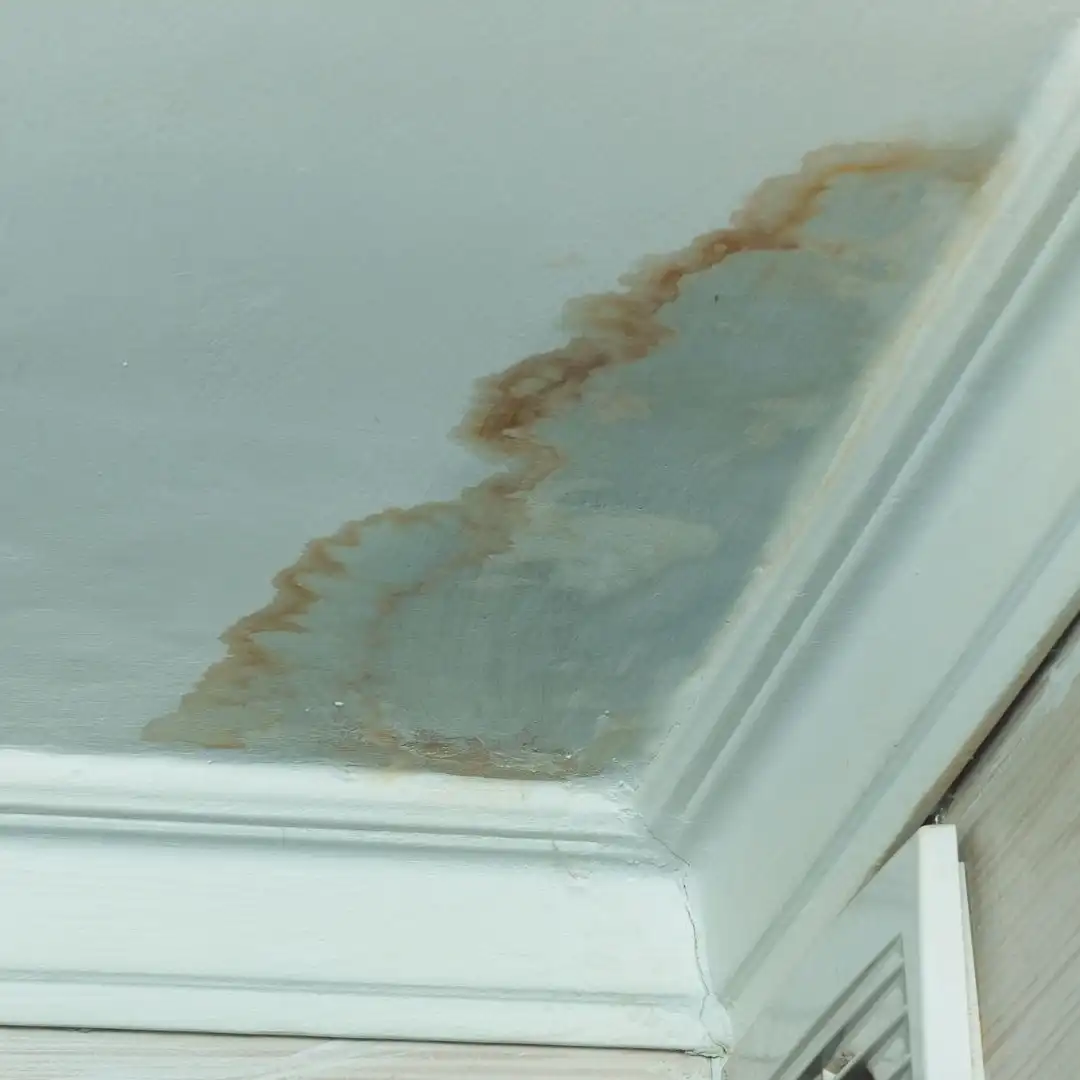
Myth: If You Cannot See Water, There Is No Damage
The myth says that as long as the floor looks dry and the ceiling is not dripping, your home is fine. The reality is that slow leaks travel along the path of least resistance, which is rarely a straight line. Water wicks into bottom plates, runs along subfloor seams, and soaks into insulation cavities long before any visible cue reaches the surface. We routinely find subfloor moisture readings above 30 percent under flooring that looks pristine. If you suspect something is off, the early signs of hidden water damage are worth reviewing because most homeowners miss them entirely. The other tell is smell. A faintly musty closet, a kitchen base cabinet that smells earthy, or a bathroom that never quite airs out after a shower are all signals that moisture is sitting somewhere it should not. When Spyglass Falls Water Restoration arrives on site in Spyglass Falls, in most cases within 2 hours, the first step is almost always a non invasive scan of the suspect area to confirm whether the dry appearance is accurate or misleading.
Myth: A Slow Leak Is Too Small to Cause Mold
People assume mold needs a flood to grow. The reality is that mold needs only a consistent moisture source, the right temperature, and organic material like paper faced drywall or wood framing. A leak putting out a cup of water a day for three weeks creates the perfect environment. Under IICRC S520 guidance, we treat any chronically damp cavity as a probable microbial concern. In Spyglass Falls crawl spaces and bathrooms, we often confirm growth within 10 to 14 days of a slow leak starting. The volume of water is almost beside the point. What matters is whether the material stays above roughly 16 percent moisture content for long enough, and a slow steady drip is actually better at sustaining that condition than a single large spill that evaporates from exposed surfaces.
Myth: Hidden Damage Repairs Always Cost a Fortune
The myth is that any call to a restoration company means tens of thousands of dollars. The reality is that catching a slow leak early often keeps the project in the modest range, sometimes a few hundred to a couple thousand dollars for targeted drying and minimal demolition. The expensive jobs are the ones where the leak ran for months and now involves mold remediation, structural repairs, and flooring replacement. Early action is the single biggest cost saver in our trade.
Myth: You Can Just Replace the Drywall and Move On
The myth is that swapping out the visibly damaged drywall ends the problem. The reality is that the framing, insulation, and subfloor behind that drywall often hold most of the moisture. If those materials are not dried to standard or removed where saturation is too deep, the new drywall will trap moisture against wet wood. Within weeks, you have mold on the back side of brand new construction. We always verify substrate readings before any reconstruction begins, and a quick read of how much drywall has to come out explains the cut decisions we make on site.
Myth: Insurance Will Not Cover a Slow Leak, So Do Not Bother Filing
The myth is that all slow leaks are excluded as gradual damage. The reality is more nuanced. Many policies exclude long term seepage, but they often cover the sudden discovery and resulting damage if the leak itself was not reasonably knowable. The documentation matters enormously. Moisture maps, photos, and a clear scope from a certified restoration contractor can change the outcome. Our guide to filing a water damage claim walks through what adjusters look for and how to present the loss correctly. Even when a claim is partially denied, the covered portion frequently includes mitigation costs, content protection, and any sudden secondary damage like a stained ceiling that collapsed once the cavity finally gave way. Filing with full documentation almost always beats not filing at all.
Myth: Drying It Out With Fans Is Enough
The myth says a couple of box fans and an open window will dry the cavity. The reality is that household fans move air but do almost nothing for humidity, and they cannot reach water trapped inside wall assemblies, under tile, or beneath cabinets. Proper structural drying uses calibrated air movers paired with low grain refrigerant or LGR dehumidifiers, monitored daily against dry standard readings. Without that combination, you end up with surface dry materials that are still wet underneath. Opening windows can actually make things worse on a humid Spyglass Falls summer day, since you may be pulling outdoor moisture into a cavity you are trying to dry. Controlled drying is a closed loop process, not a ventilation project.
Myth: Only Old Homes Have Hidden Leak Problems
The myth is that newer construction is immune because everything is up to current code. The reality is that some of the worst hidden leaks we find in Spyglass Falls are in homes under ten years old. Builder grade supply lines, push fit fittings under sinks, and improperly sealed shower pans are all common culprits in newer builds. Tight modern envelopes also trap humidity better than older homes, which means a small leak in a 2018 build can produce mold faster than the same leak in a 1955 ranch with leaky windows and constant air exchange. Age of the house tells you very little. The condition of the plumbing connections, the quality of the original waterproofing, and the ventilation of the space matter far more.
Myth: The Stain on the Ceiling Means the Leak Is Right Above It
The myth assumes water falls straight down. The reality is that water follows joists, pipes, and electrical runs. A stain in your dining room ceiling might trace back to a toilet flange two rooms away. This is why probing or cutting based on the visible stain alone often misses the source. We use thermal imaging and moisture mapping to trace the actual water path before any demolition starts, which saves homeowners from unnecessary repairs. One Spyglass Falls job last season started as a single brown ring near a light fixture and ended up tracing back nearly 14 feet to a hairline crack in a shower pan on the floor above. Cutting under the stain alone would have shown dry framing and left the actual problem running for another six months.
Myth: A Plumber Fixed the Leak, So I Am Done
The myth assumes stopping the water source ends the project. The reality is that the plumber addressed the cause but not the consequences. Wet cavities, saturated insulation, and elevated humidity continue to damage your home long after the pipe is patched. Drying, sanitizing, and verifying dryness are separate disciplines, and they are exactly what IICRC S500 certified restoration crews handle. Plumbers are excellent at their trade, but most do not carry penetrating moisture meters, thermal cameras, or LGR equipment, and they are not trained to scope a drying plan. The two services complement each other rather than overlap.