How Roof Leaks Actually Soak an Attic
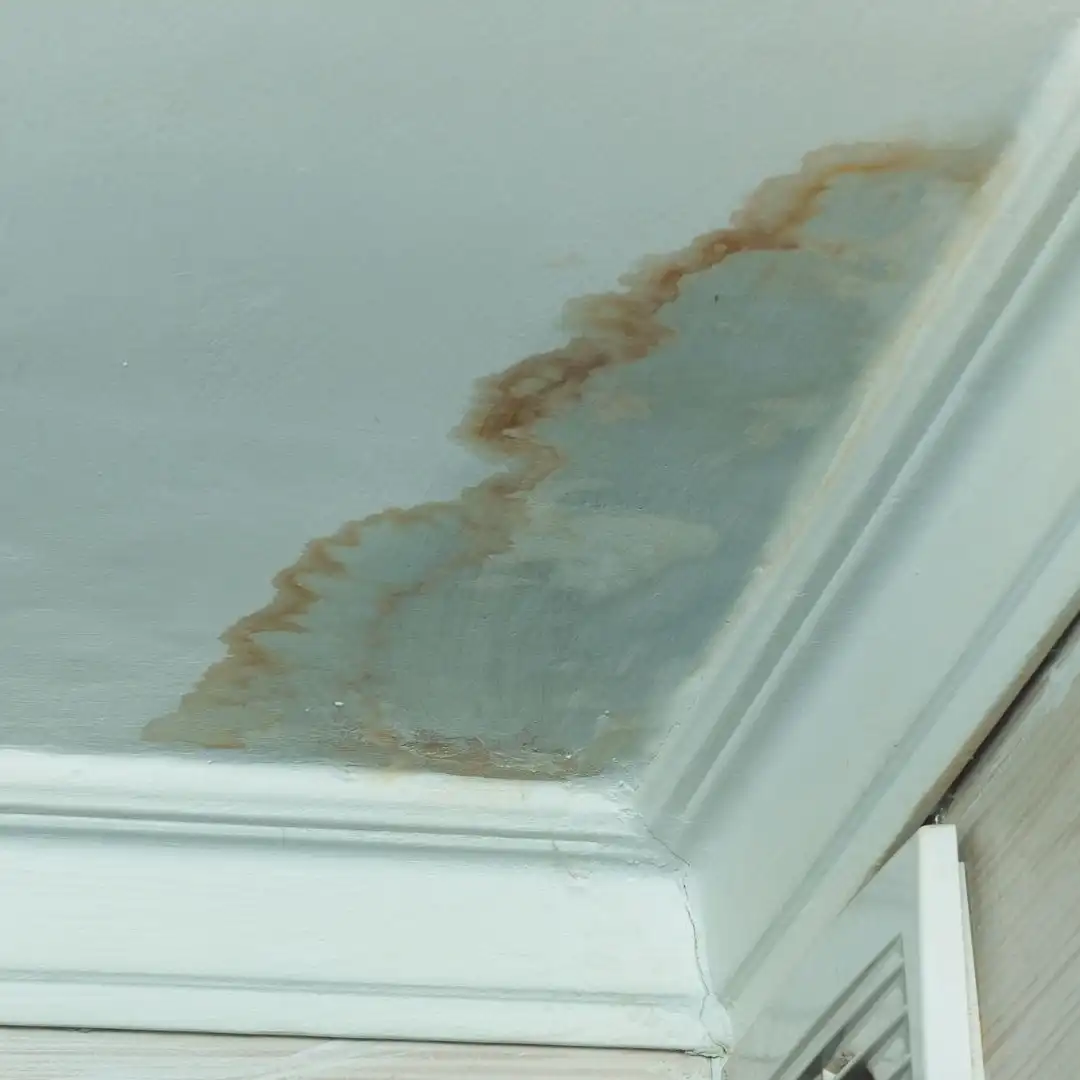
Most roof leaks do not announce themselves at the point of entry. Water finds a nail hole, a lifted shingle, a cracked boot around the plumbing vent, or a gap in the flashing where the chimney meets the deck, and from there it travels. It runs down the underside of the roof sheathing, follows a rafter, drips onto the top of your insulation, and spreads out across the attic floor before gravity finally pulls it through the ceiling drywall below. By the time you see a stain in the bedroom, the actual leak point on the roof might be ten or fifteen feet away from where the water is showing up. This is why we never assume the visible damage is the whole damage. Our moisture meters and thermal cameras trace the path back to the source, because patching drywall without finding the real entry point just gives the next rainstorm a fresh canvas to ruin.
Wind-driven rain is the other common culprit, and it behaves differently than a slow drip. A horizontal blast during a storm can push water under shingles that look perfectly intact when the sun comes out the next morning. Ice dams in winter do something similar, backing melted snow up under the shingle line until it pools on top of the sheathing and seeps through. If you have already dealt with one of these events, our guide on storm damage water restoration and flood cleanup walks through what to document for insurance and what to expect from the mitigation process.
There is also a slower category of leak that homeowners in Spyglass Falls often overlook entirely, which is the chronic seep from a failing roof penetration that releases just a teaspoon of water per storm. Over a year or two, that teaspoon adds up to gallons soaked into the same spot, and the resulting damage looks more like rot than a fresh leak. We see this constantly around skylights that were not flashed correctly during installation, around satellite dish mounts that were screwed straight through shingles without sealant, and around old roof jacks where the rubber gasket has cracked from UV exposure. None of these will show up as a dramatic ceiling stain right away, which is exactly why they tend to be the most expensive when finally discovered.
What the Damage Looks Like When We Open Up the Attic
The first thing we check is the insulation, because insulation is the canary. Fiberglass batts that have been wet lose almost all their R-value and stay wet for weeks if the attic does not ventilate well. Blown-in cellulose is worse, since it absorbs water deep into the fiber and clumps into heavy, useless mats that have to be bagged out and hauled away. Once the insulation is lifted, we inspect the rafters, the sheathing, the ridge beam, and any structural connections for staining, soft spots, delamination, and active fungal growth. Plywood sheathing that has been wet for a long time will start to separate in layers, and rafters can develop the dark streaks of decay fungi that weaken the wood even after it dries.
Ductwork running through the attic is another concern most homeowners forget about. Flex duct that gets soaked from above can hold water inside the outer wrap for months, which then drips into your HVAC system and circulates moisture and spores through the whole house. Recessed light cans, bathroom exhaust fans, and electrical junction boxes in the attic floor all need to be checked for water intrusion before the power gets turned back on in those circuits. We treat the attic as a connected system, not a sealed box, because what happens up there eventually shows up in your living room, your air quality, and your energy bills.
Stored belongings are usually the heartbreak portion of the inspection. Cardboard boxes of photographs, holiday decorations, baby clothes, tax records, and inherited keepsakes tend to live in attics precisely because nobody wants to deal with them, and they are almost always sitting directly on the joists where leaked water pools first. We document everything for the claim, photograph items in place before they are moved, and separate restorable contents from total losses so the adjuster has clear evidence of what was lost. Paper goods and textiles that have been wet for more than a couple of days are rarely salvageable, but framed art, ceramics, plastic bins, and metal items can often be cleaned and returned. We would rather take the extra hour to sort carefully than throw everything in a dumpster and tell you later.
Drying, Mold Prevention, and Knowing the Clock
Once the leak source is contained, usually with an emergency tarp until your roofer can get out, we move into structural drying. Attics are tricky to dry because they are hot, poorly accessible, and full of materials that absorb moisture at different rates. We set air movers angled along the rafters, run dehumidifiers sized for the cubic footage, and monitor moisture content in the wood with pin meters until the readings match the dry standard for unaffected materials in your home. This typically takes three to five days, sometimes longer if the sheathing was saturated. The clock matters because mold colonization on wet wood can start within forty-eight to seventy-two hours, which is why our 48 hour rule for mold growth after water damage guide is one of the most read pages we publish.
If mold is already established when we arrive, the work shifts into S520 remediation. That means containment with poly sheeting, negative air pressure with HEPA filtration, removal of contaminated porous materials, antimicrobial treatment of structural wood, and post-remediation verification before anything gets closed back up. We do not paint over mold or fog and hope. The presence of mold also raises insurance questions, and our overview of what homeowners insurance covers for water damage can help you understand which parts of an attic claim are typically paid and which parts get pushed back on. Most carriers cover sudden roof leaks but not gradual ones, and the documentation we provide is often what makes the difference.
Ventilation is the quiet hero of any attic recovery, and it is the piece that most repair crews never address. An attic with blocked soffit vents, a painted-over gable vent, or a ridge vent buried under new shingles will trap humidity even on a sunny day, which means the next minor leak becomes a major mold problem far faster than it should. Before we close out a job, we verify that the attic can actually breathe, and we flag any ventilation defects in the final report so you can pass that information along to the roofer who comes behind us.
When you call Spyglass Falls Water Restoration, a crew is typically dispatched within 2 hours for emergencies in Spyglass Falls, and the free assessment includes a written scope so you know exactly what we found and what we recommend. If the attic just needs to dry out and the roof needs a small repair, we will say so. If it needs full insulation replacement and remediation, we will show you the moisture readings and photos that prove it.